
Chinese New Year : happiness, gratitude and meaning on the salutation table
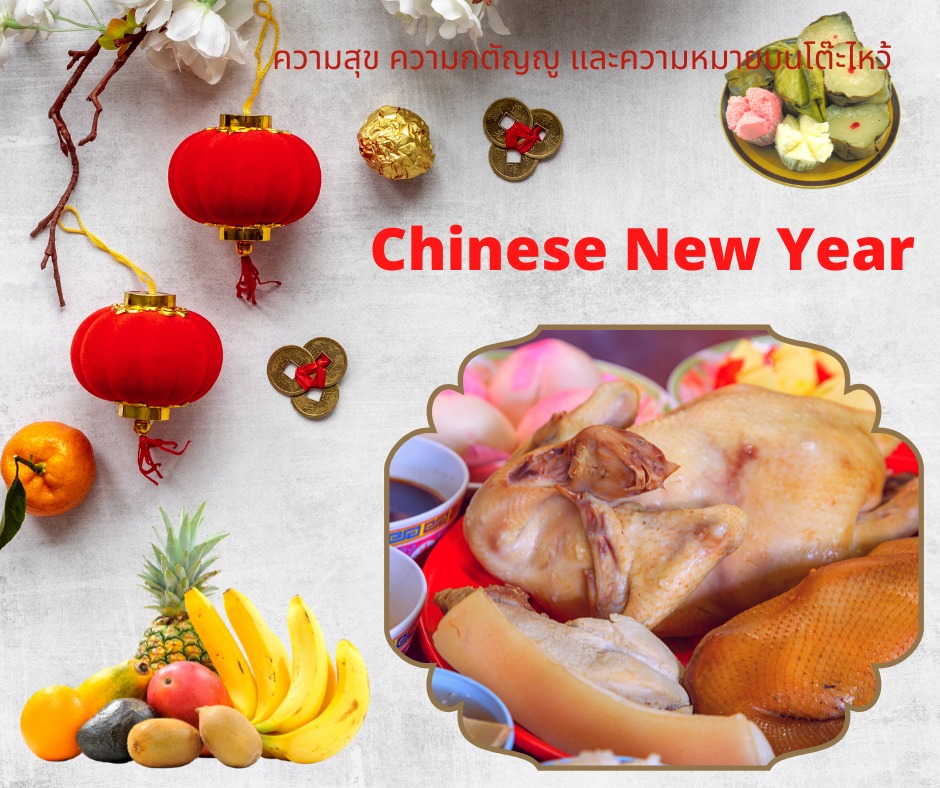 |
Chinese New Year Festival or Chinese New Year's Day is an opportunity for Chinese people around the world to celebrate together with family. One of the highlights of the festival is the altar, which is usually held on New Year's Eve 2022, on January 31st.
Chinese New Year traditions in Thailand consist of paying homage to holy in the early morning. Worshiping ancestors in the late morning, paying respects to phantom in the afternoon and pay homage to the god Cai Xing Yee late at night in which each round will use different offerings.
Worshiping the gods or holy is mainly boiled meat. Worshipers may choose to pay respect to "Sa-Sae" or pay respect with three things. Including pork loin with skin, duck (with giblets), chicken (with giblets). Orterwise worshiping "Ngow Sae" means pork, duck (with offal), chicken (with offal), whole fish or seafood such as dried squid without boiling, boiled shrimp, boiled crab, or cooked boiled clams or liver.
• Pork means fertility, having something to eat, not lacking
• Duck means purity and cleanliness.
• The rooster represents diligence auspiciousness.
• Fish is a symbol of wealth and abundance.
• Liver in Chinese sounds like noble, therefore means the power of fortune.
Besides meat, worshiping the gods also includes desserts and fruits. Which does not specify the exact amount like meat but often choose fruit that has auspicious names such as bananas, oranges, apples, pear, grapes, pineapples. The popular desserts in the New Year are Khanom Kheng, Khanom Thien, Khanom Tuaifu, Khanom Salee, and Jan-ab.
• Bananas look like fingers; it is to bring good fortune.
• Orange represents good luck.
• Apple means peace.
• Pear, money flows like the color of a pear.
• Grapes, exuberance.
• Pineapple is synonymous with the word of fortune come in.
• Khanom Kheng means wealth abundance and wealth.
• Khanom Thien symbolize prosperity.
• Khanom Tuaifu means fame.
• Jan-ab is happy forever.
Worshiping ancestors in the late morning will pay homage to savory food, fruit, silver and gold paper, Kong Tek set, which offerings in this section often choose what the ancestors like, but have an auspicious meaning.
Worship phantom is an alms given to a ghost who has no relatives. Usually use food from the morning. Finish by lighting firecrackers to drive away bad luck.
Paying respect to the god Cai Xing Yee late at night, it is an offering for good luck. Using Kanom Yi, 5 auspicious fruits, vegetarian food, steamed rice and tea.
新正如意 新年发财! 万事如意 心想事成