
 |
7th July, or the 7th day of
the 7th month in Japan, is the day of
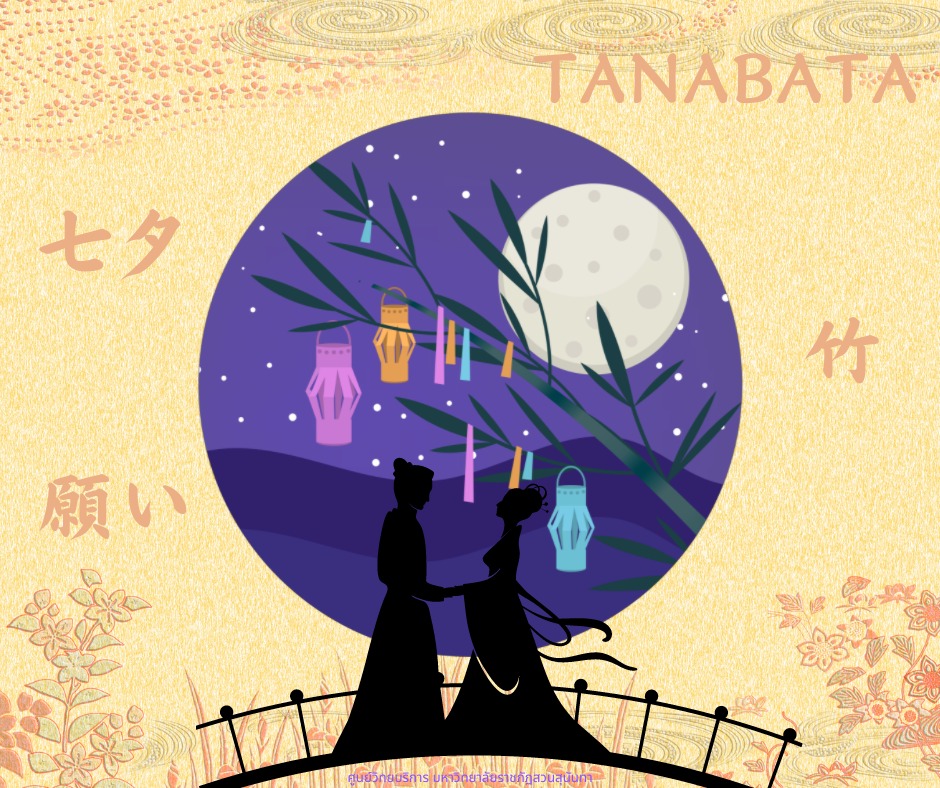
Tanabata, a day of love where a weaver
princess and a cowherd meet only once a
year. People will write their wishes on
small pieces of paper called tanzaku and
hang them on bamboo branches to pray for
the stars.
On the night of
Tanabata, the Orihime Star (Vega) or
Weaving Princess Star and the star
Hikoboshi (Altair) or the cowboy star
will shine the most in the year.
According to legend, a weaver princess
and a cowherd fall in love and begin to
abandon their duties. When Orihime's
father, the ruler of the heavens, found
out, he was furious. Thus he separated
the two by the Milky Way in between. The
two meet once a year on the 7th of the
7th month.
The Shepherd star
(Altair) represents artistic talent. The
weaving female star (Vega) represents
nobility.
Originally, Tanzaku
sheets had only five colors: blue, red,
yellow, white, and black (or purple),
each with a different meaning. Inside is
written a prayer along with other types
of decorations made of paper to hang
decorations on bamboo branches similar
to Christmas tree decorations. Because
bamboo is considered a sacred tree that
will help ward off evil. At the end of
the festival, this bamboo will be
floated on the
water.
Other decorations
are used to decorate bamboo branches
with tanzaku, such as paper cranes, to
wish for a long life. A paper lantern, a
kinshaku bag that symbolizes a purse to
pray for wealth. Decorative items shaped
like nets made of paper, to wish for a
prosperous fishery. Paper folded into a
doll or kimono, it is believed that it
will help ward off ailments, and more
according to the culture of each
locality.
During the Tanabata
festival, many places in Japan are
uniquely decorated with bamboo hangings,
paper wishes, paper lanterns, and other
ornaments made of colorful paper like
other summer festivals, visitors may
wear a yukata.
Story and
Illustration: Ratchanok
Thongkhaokham